
If you run a business in South Jersey, your next customer is probably not driving past your sign. They are searching on a phone. They type in the service they need and the town they live in, and within a minute they have picked two or three businesses to call. Internet marketing, for a local company, is the work of being one of those businesses. It is a short list of things done well and kept current: your Google profile, your reviews, your website, your ads when you run them, and the follow-up that catches the people who reach out.
We are OnTarget Media Group, based in Vineland. This is the same framework we use for clients from Millville to Cherry Hill, written out plainly so you can judge any agency, including us, against it.
How people in South Jersey actually search
Nobody wakes up wanting to browse a website. A homeowner in Deptford with a leaking water heater searches for the fix, not for a company. A couple in Marlton planning a wedding searches for the venue and the jeweler, not for a brand. The searches that pay a local business are specific: the service, the town, and often the words near me. Google answers those searches with the map pack first, three businesses with ratings, hours, and a call button, before it shows regular website listings.
That order matters. It means the first impression most local customers get of your business is not your homepage. It is your Google Business Profile, your star rating, and your last few reviews. Whitespark's Local Search Ranking Factors survey, which polls 47 local search experts, puts Google Business Profile signals at the top of what moves those map rankings, ahead of the website itself (Whitespark Local Search Ranking Factors). Your website still closes the sale. It just rarely gets the first look.
Geography here is its own wrinkle. South Jersey is not one market. It is Cumberland, Gloucester, Camden, and Burlington counties, dozens of towns with their own loyalties, and the Philadelphia suburbs bleeding into Cherry Hill, Voorhees, and Mount Laurel. The businesses that win local search name their towns and mean it.
Your Google profile and your reviews carry the load
Start with the free asset most businesses set up once and abandon. A complete Google Business Profile means the right primary category, every service listed with a plain description, current hours, real photos of the business and the work, and reviews coming in on a steady basis.
The review numbers explain why. BrightLocal's Local Consumer Review Survey found that 97 percent of consumers read reviews for local businesses, and 41 percent say they always read them when browsing. The thresholds are just as direct: 47 percent of consumers will not even consider a business with fewer than 20 reviews, and 31 percent will only use a business rated 4.5 stars or higher (BrightLocal Local Consumer Review Survey). Read that against your own profile. If you have nine reviews and a 4.2 rating, you are filtered out before your website ever loads, no matter how good the site is.
Reviews are not a campaign. They are a habit: ask at the moment the customer is happiest, send the direct link, answer every review that comes in, and keep it going month after month. It is the least expensive marketing on this page and the one most businesses quit first. Our full service list for getting found starts with this work, and you can see how it fits together on our page for SEO and local search services.
Your website has to answer like a local
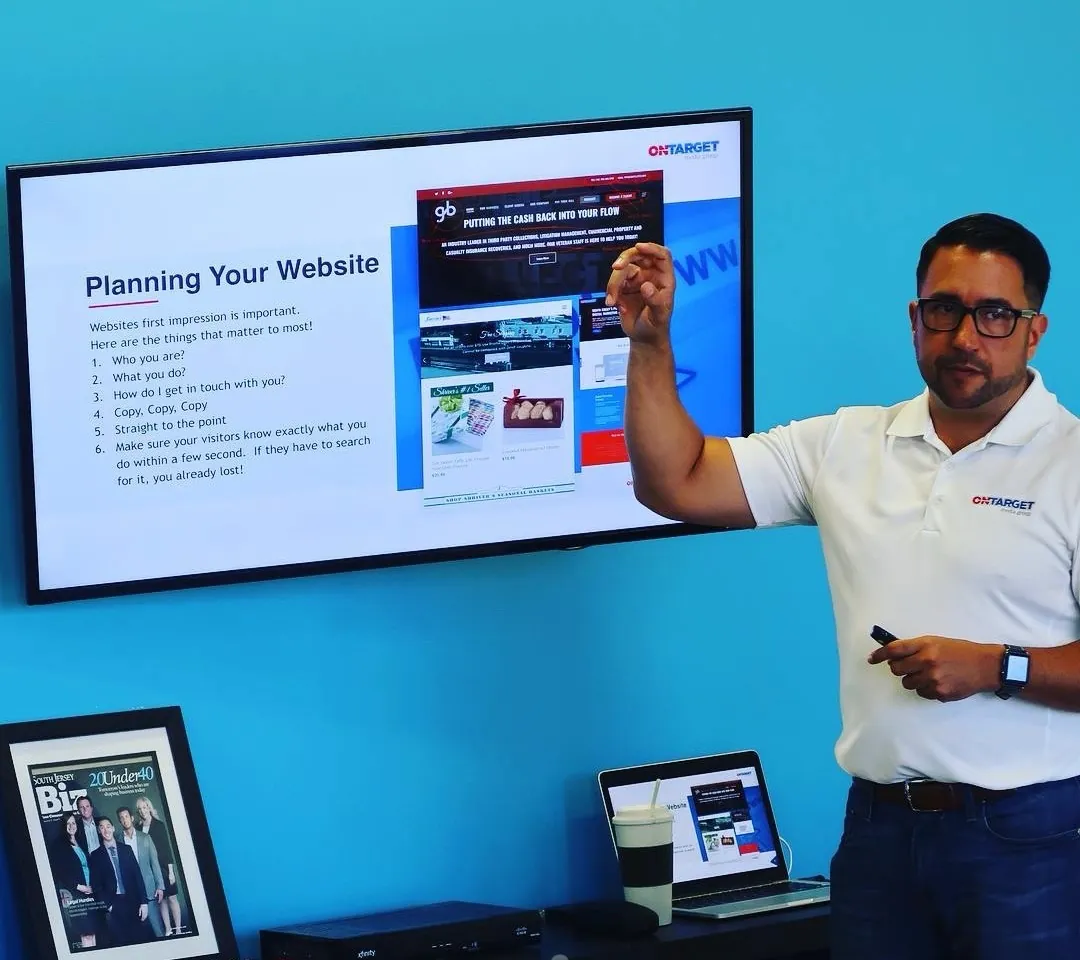
Once a searcher clicks through, the website has one job: confirm, fast, that you do the thing they searched for, in the place they searched from, and make the next step obvious. That means one clear page per service, written for one reader with one problem. It means the towns you serve named on the page, in real sentences, not stuffed into a footer. It means the phone number and the contact form impossible to miss on a phone screen, because most of this traffic is on a phone screen.
Structure matters to Google as well as to people. Google's own SEO Starter Guide explains that the search engine finds new pages mostly through links, from other sites and from inside your own site, which is why a service page that nothing links to tends to stay invisible (Google Search Central, SEO Starter Guide). A homepage that links clearly to each service, service pages that link to each other where it helps the reader, and articles like this one pointing at the services they discuss: that internal structure is how a small site tells Google what it is about.
If your site has grown by adding pages nobody connected to anything, this is usually where the repair starts. Our website design work begins with that audit more often than with a new look.
Paid search fills the gap while SEO builds
SEO is a compounding asset and a slow one. Google says plainly in the Starter Guide that changes can take anywhere from a few hours to several months to show up in results. Ads exist for the gap. A Google Ads campaign puts you in front of the same town plus service searches this week, at a cost per click you control, and Local Services Ads put screened businesses at the very top for the trades Google covers, charging for leads instead of clicks (Google Ads).
The mistake we see is ads running to a weak page. Paying for a click that lands on a homepage with no clear service and no easy call button is how a small budget disappears. Sequence it: profile first, website second, ads third.
Follow-up is where the money is either kept or lost
Everything above creates inquiries. None of it answers them. A form filled out at 8 in the evening and answered at 10 the next morning is a lead handed to whichever competitor replied first. Local marketing that works includes the systems behind the website: the inquiry routed to the right person the moment it lands, an automatic text or email that tells the customer they were heard, and a simple pipeline so no request sits forgotten in an inbox. That is the role of email and CRM automation in a local program, and it returns more than most ad campaigns, because it works on leads the business already paid to attract.
A town-by-town market, not a dot on a map
What works in Vineland and Millville, where word of mouth still runs strong and search volume is thinner, is a visibility game you can win completely: own the profile, own the town searches, be the obvious choice. In Glassboro, Deptford, and Washington Township, the same basics meet more competition. In Cherry Hill, Mount Laurel, Marlton, and Voorhees, you are up against Philadelphia money and national franchises, and the businesses that hold their ground have deep service pages, real local proof, and reviews that keep coming.
One framework, three different levels of fight. Any plan that quotes the same package for all of it, without asking where your customers live, was written for the agency, not for you.
Common questions
What does internet marketing include for a small local business?
At minimum: a complete Google Business Profile, a review system, a website with one clear page per service, and tracking so you can see what produces calls. Most businesses add SEO work on those pages, and many add Google Ads or Local Services Ads for immediate visibility. Social media and email follow-up support the core; they do not replace it.
How long before it produces leads?
Ads can produce inquiries in the first week. Profile fixes and review growth usually move map visibility within one to two months. SEO on your website compounds over three to six months. Google's guidance is to judge SEO changes over weeks to months, and any honest plan gives you checkpoints at 30, 60, and 90 days instead of a promise about next Tuesday.
Do I need to serve all of South Jersey to compete?
No. You need to be findable in the towns you actually serve. A focused business in six towns with a complete profile and steady reviews will outrank a vague business claiming the whole region, because Google ranks you against the searcher's location and your actual footprint.
Can I do this myself?
The profile and the review habit, yes, and you should, even with an agency. Website structure, SEO work, and ad accounts are where most owners run out of hours rather than ability. The split that works for our clients: the business owns the reviews and the local knowledge, we own the build and the campaigns, and both sides look at the same numbers.
Start with the honest picture
Before any of this, find out where you stand: what your profile shows today, which searches you appear in, and what your website is actually producing. That is what our free marketing assessment is for. We will review your current marketing, tell you plainly what we would fix first and what we would leave alone, and you can take the list to anyone you like. If you would rather talk it through, book a consultation on this site or call us at (856) 661-7770. We are in Vineland, we work across South Jersey and beyond, and the first conversation costs nothing but the time (free marketing assessment).